Dodge Viper Coloring Page: Roar with Speed!
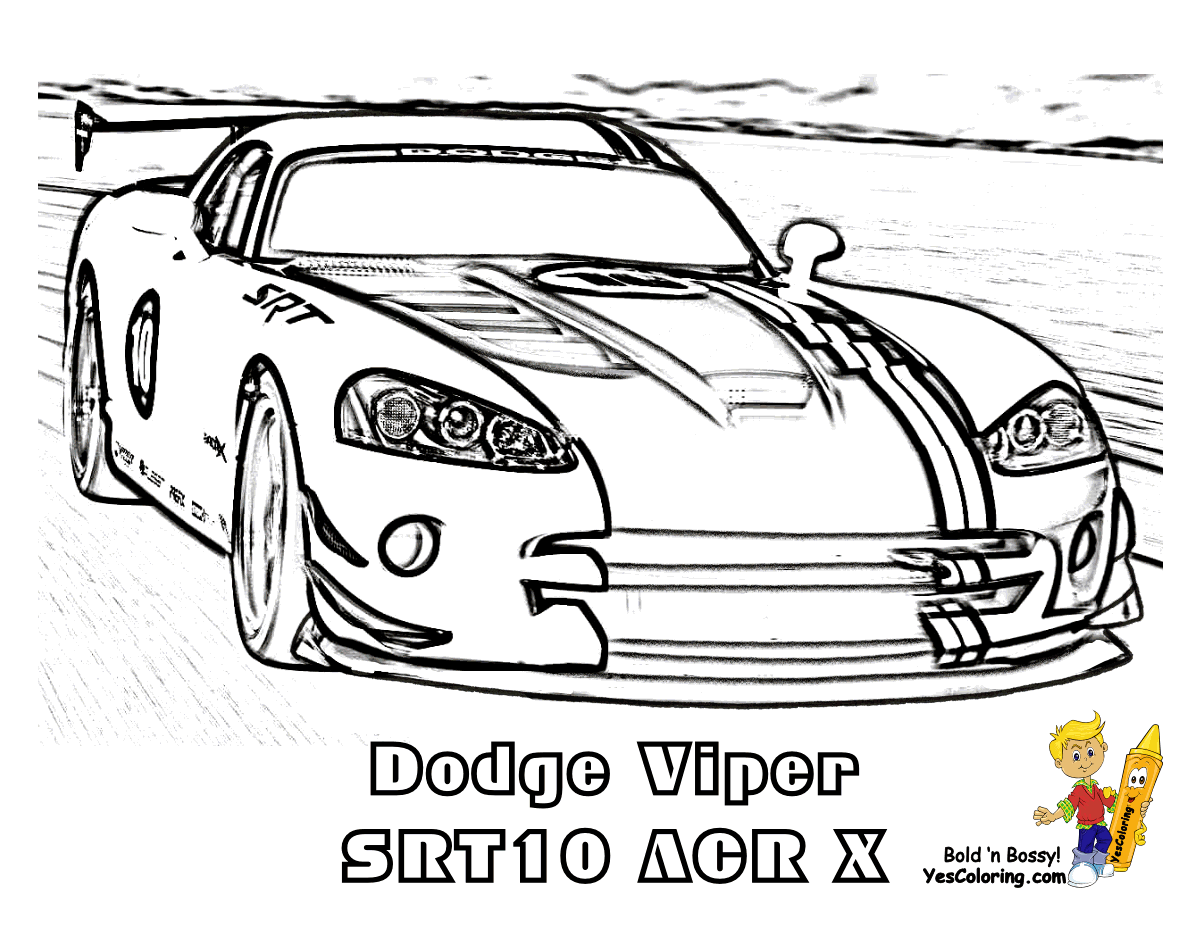
For automotive enthusiasts and coloring aficionados alike, the Dodge Viper coloring page represents a thrilling intersection of speed and art. This specific template captures the aggressive silhouette and muscular contours of one of America's most iconic performance machines. By providing a structured outline, it allows users to inject personality into the legendary Viper design. The act of coloring becomes a personal interpretation of a machine built for precision and power. This simple activity transforms into a creative exercise celebrating automotive engineering.
The Appeal of the Viper Silhouette
The enduring popularity of the Dodge Viper coloring page stems from the car's unmistakable aesthetic. With its long hood, short deck, and gaping air intakes, the outline is instantly recognizable and visually dynamic. These distinct features create bold shapes that are ideal for coloring, offering clear sections for different color schemes. Children and adults often gravitate toward the challenge of filling in the sharp angles and smooth curves. The resulting artwork serves as a tribute to a vehicle that defined a generation of American muscle.
Benefits for Different Age Groups
Engaging with a Dodge Viper coloring page offers distinct advantages depending on the user's age. For younger children, the act of gripping crayons or markers helps develop fine motor skills and hand-eye coordination. Older kids and teenagers can focus on color theory, experimenting with gradients and shading to simulate metallic paint. Adults find the activity to be a form of mindful relaxation, providing a break from digital screens and daily stress. It is a low-pressure hobby that delivers a sense of accomplishment upon completion.


Customization and Creative Freedom
Unlike a finished model, a coloring page provides a blank canvas for imagination. While traditional Dodge Viper colors like Competition Blue or Bright Red are popular choices, users are free to explore unconventional palettes. Flames, tribal patterns, or futuristic neon designs can be applied without the constraints of reality. This freedom encourages artistic expression and allows the creator to envision what the car could become. The page effectively turns the vehicle into a toy for the mind.
Educational and Historical Context
Teachers and parents can utilize the Dodge Viper coloring page as a tool for engagement. While the user colors, it is possible to introduce the history of the Viper, such as its debut in 1992 and its race car heritage. Discussing the function of the large wings or the purpose of the V10 engine can spark interest in engineering and physics. It serves as a gateway topic, encouraging further research into automotive technology and design principles.


| Color Scheme | Description | Best For |
|---|---|---|
| Competition Blue | A deep, metallic blue reminiscent of the original 1992 model. | Traditionalists and purists. |
| Bright Red | A fiery, aggressive red that highlights the car's powerful stance. | Those who want a vibrant, high-energy look. |
| Matte Black | A sophisticated, non-reflective color that emphasizes the car's lines. | Adults seeking a modern and stealthy aesthetic. |
| Digital Camouflage | A pixelated pattern that breaks up the shape of the vehicle. | Creative users looking for a unique, modern twist. |
Accessibility and Availability
One of the greatest advantages of the Dodge Viper coloring page is its accessibility. These templates are readily available for free on numerous websites dedicated to printing activities. Users can download the PDF files and print them instantly at home or in the office. This eliminates the cost associated with physical toys or models. Furthermore, the file size is usually small, ensuring quick downloads without consuming excessive bandwidth.
Whether you are seeking a quiet afternoon activity, a creative project for a child, or a piece of automotive fan art, the Dodge Viper coloring page delivers on all fronts. It captures the spirit of performance and design in a format that is both accessible and adaptable. By picking up a pencil or marker, you are not just coloring; you are interacting with automotive history.




Related Articles

Detroit Lions Helmet Coloring Page – Roar With The Pride
The Detroit Lions helmet coloring page offers a fantastic entry point for fans of all ages to engage with the team's iconic branding. This simple yet effective...

Jungle Fury Animal Spirit Coloring Page: Roar with Wild Creativity
Jungle fury animal spirit coloring page designs invite you to channel your inner wild self through intricate patterns and bold linework. These illustrations...

Puma Logo Coloring Page: Roar With Creativity
The Puma logo coloring page offers a dynamic gateway for artists of all ages to engage with one of the most iconic emblems in sporting history. This specific...

Roar with Ferrari: Ultimate Logo Coloring Page for Kids
Exploring the iconic prancing horse through art is a rewarding experience for enthusiasts of all ages, and a Ferrari logo coloring page offers the perfect...

Roar With Joy: Free Printable Jaguars Logo Coloring Page For Kids
Engaging children with the majestic jaguar through a jaguars logo coloring page offers a unique blend of entertainment and education. This specific activity...

Narnia Coloring Page: Lion with Prince Aslan Printable Art
Discover the majestic world of Narnia through our exclusive collection of the Narnia coloring page lion with Prince Caspian. This specific search term...