Private Practice Release of Information Form: Secure Patient Consent Template
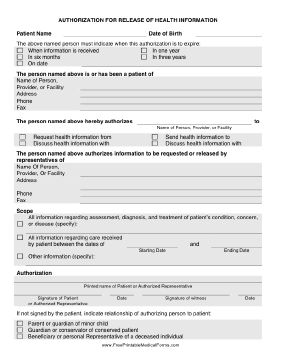
Navigating the complex landscape of healthcare requires a robust system for sharing critical patient data securely and efficiently. The private practice release of information form serves as the foundational legal document that facilitates this process, ensuring that sensitive medical records are transferred only to authorized parties. Without a precise and well-structured authorization form, a practice risks violating patient privacy laws and facing significant legal repercussions. This document acts as a formal contract between the healthcare provider and the entity requesting the records, outlining the scope and limitations of the data release.
Understanding the Core Functionality
At its essence, a private practice release of information form is a standardized template that grants a healthcare provider permission to disseminate a patient's medical history to a third party. This is not merely a procedural hurdle; it is a cornerstone of compliance with regulations like HIPAA in the United States. The form specifies the exact records being requested, the purpose of the request, and the identity of the person or organization authorized to receive the information. By signing this document, the patient exercises their right to control who accesses their private health information, transforming a potentially invasive data transfer into a transparent and consensual action.
Key Components of a Valid Authorization
A legally sound private practice release of information form must contain specific elements to be valid. First, it requires explicit patient consent, which must be signed and dated. Second, it must detail the specific records being released, avoiding vague language that could lead to over-disclosure. Third, the form must identify the recipient of the information clearly. Finally, it should include a expiration date or event, ensuring that the authorization is not open-ended. Omitting any of these components can render the form null and void, leaving the practice vulnerable.


Operational Efficiency and Workflow Integration
Implementing a standardized private practice release of information form significantly streamlines the administrative workflow within a medical office. Staff members can quickly verify that a request is complete before initiating the often time consuming process of retrieving and copying records. Digital signature capture and secure electronic storage further reduce the manual labor associated with managing paper trails. This efficiency translates directly to cost savings, allowing administrative teams to focus on patient care rather than bogging down in paperwork management.
Mitigating Legal and Compliance Risks
In an era of heightened regulatory scrutiny, the private practice release of information form is the primary defense against privacy violations. A meticulously drafted form protects the practice from potential lawsuits related to unauthorized disclosure. It ensures that the provider adheres strictly to the minimum necessary rule, granting access only to the data essential for the stated purpose. Regular reviews and updates of the form template are necessary to keep pace with changing legislation, ensuring the practice remains insulated from the ever evolving legal landscape of data protection.


Patient Rights and Transparency
Beyond compliance, the form fosters a relationship of trust between the provider and the patient. By presenting the authorization in a clear and understandable format, the practice respects the patient's autonomy. Patients appreciate knowing exactly who is viewing their medical history and for what reason. A well designed private practice release of information form demystifies the process, turning a complex legal requirement into a transparent interaction that reinforces the patient’s sense of control over their personal health journey.
Best Practices for Implementation
To maximize the effectiveness of the form, practices should adopt a few best practices. Training staff on the nuances of the document is crucial to prevent errors during the authorization process. The form should be readily available in both digital and physical formats to accommodate diverse patient preferences. Moreover, integrating the form into the patient intake process ensures that authorizations are obtained proactively, rather than reactively when a specific request is made. This forward thinking approach minimizes delays and maintains a smooth operational cadence.
| Component | Description | Compliance Importance |
|---|---|---|
| Patient Signature | Proof of informed consent | High |
| Specific Records Listed | Defines the scope of release | Critical |
| Recipient Identification | Names the receiving entity | High |
| Expiration Date | Limits the validity period | Medium |



Related Articles

Emergency Information Form for Daycare: Secure & Quick Child Care Details
For any daycare facility, maintaining a secure and organized environment begins long before the first child is picked up. A well-structured emergency...

Microdermabrasion Consent Form Template: Downloadable & SEO Friendly
For medical aesthetic professionals, the microdemandabrasion consent form template serves as the critical bridge between innovative skin resurfacing technology...

Sample Podcast Release Form: Free Template & Best Practices
Securing clear permissions is the invisible backbone of any professional podcast, yet it is often the step most overlooked by new creators. A sample podcast...

YouTube Permission Form: Easy Template & Legal Guide
Securing the appropriate youtube permission form is the foundational step for any creator or business looking to utilize footage, music, or likeness from the...

Fill Out Our Free SEC Form 4 Template for Instant, Accurate Filings
For organizations and investors monitoring corporate transactions, understanding the intricacies of insider filings is essential for maintaining market...

Effortless Certificate Action Form: Secure, Simple & SEO-Optimized
When managing legal or official documentation, encountering a certificate action form is often a critical step. This specific document serves as the official...